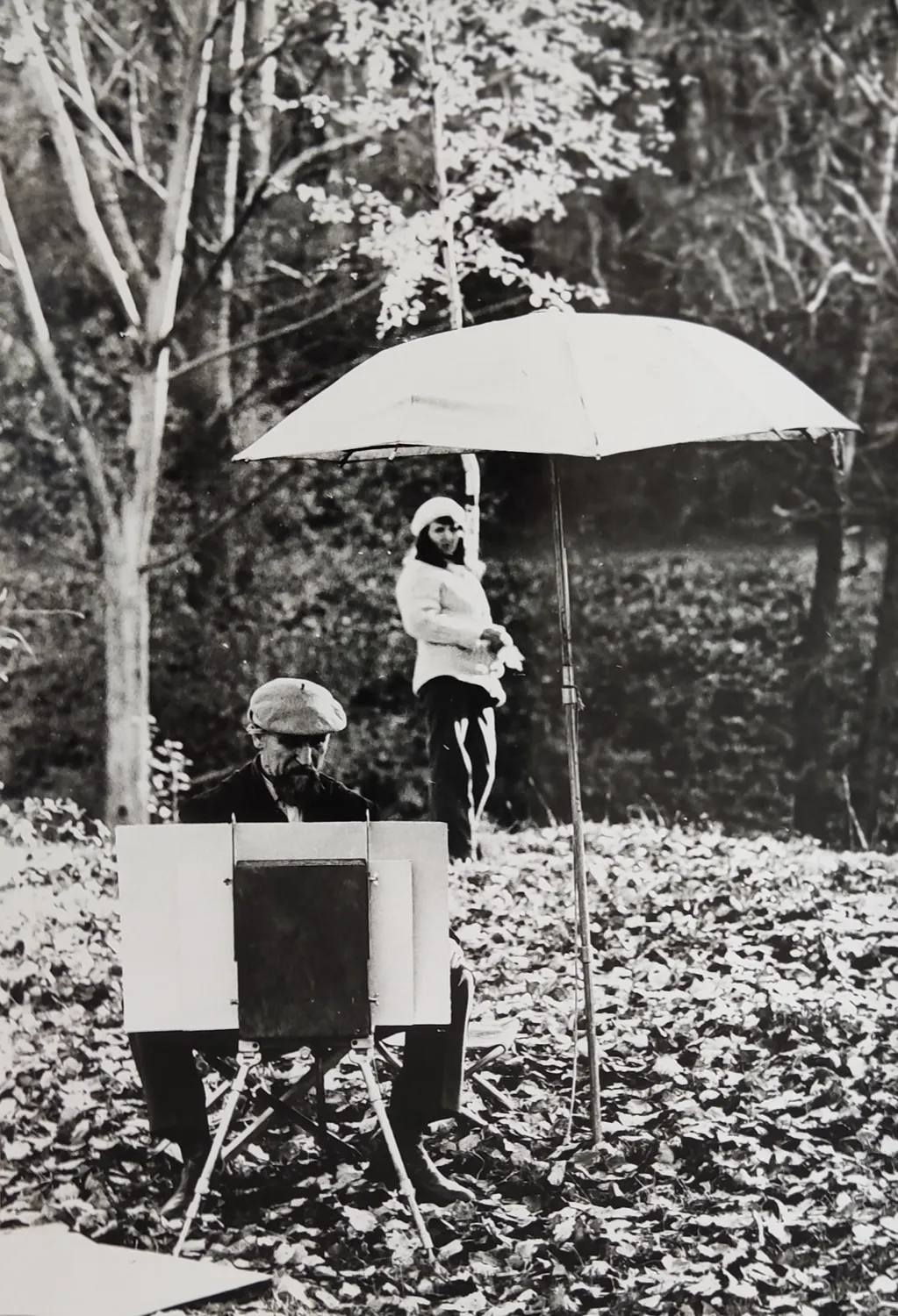
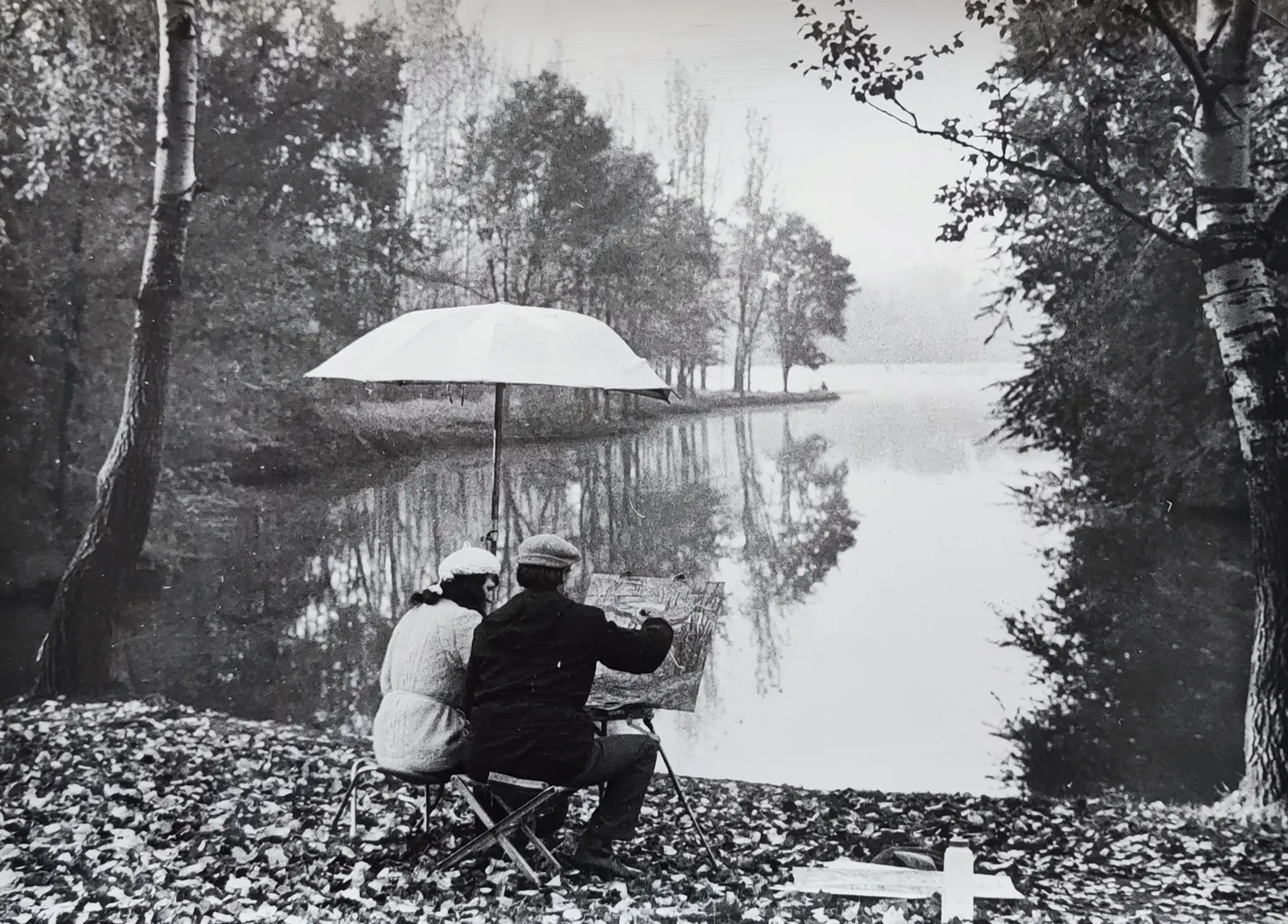
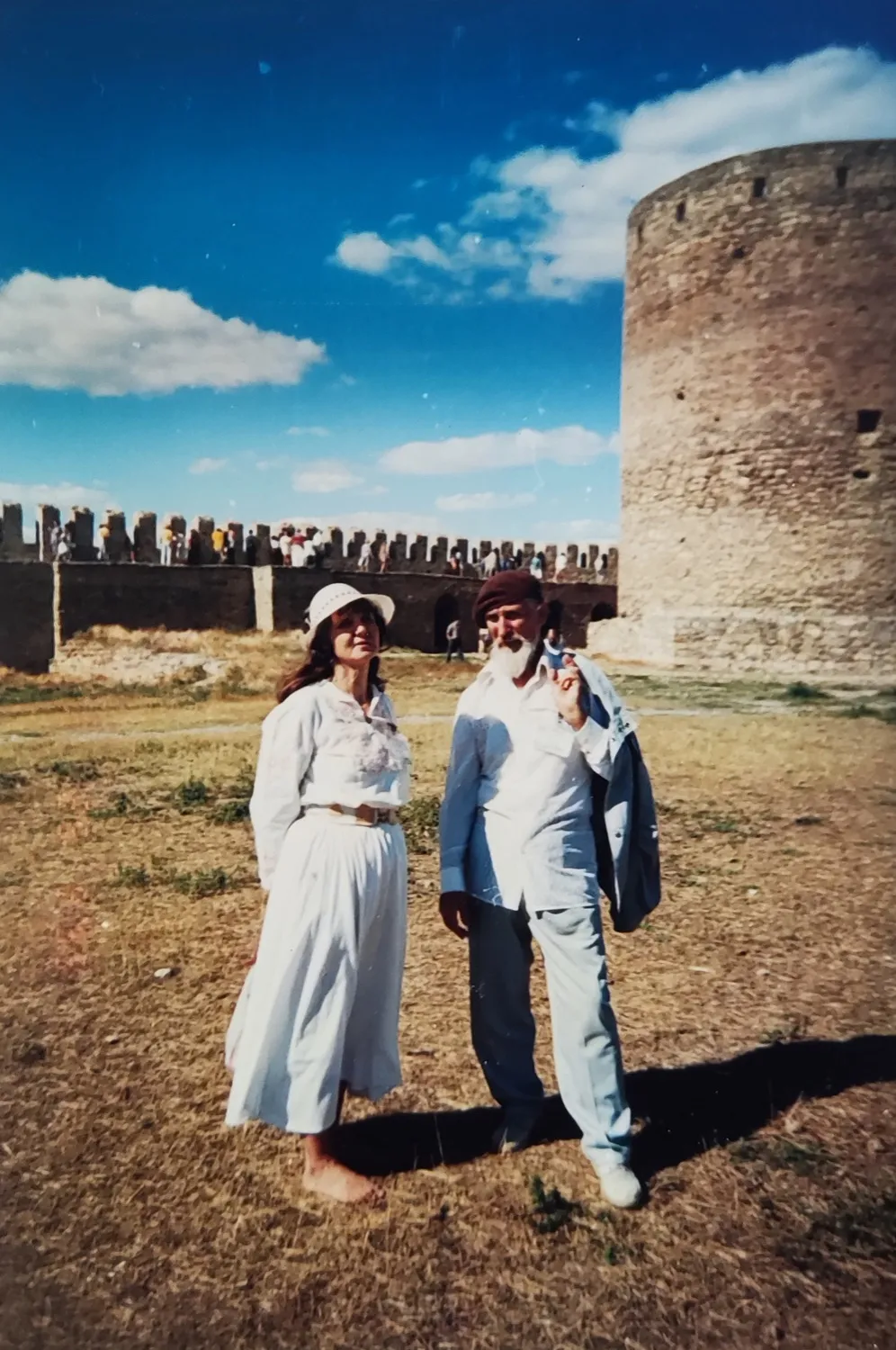
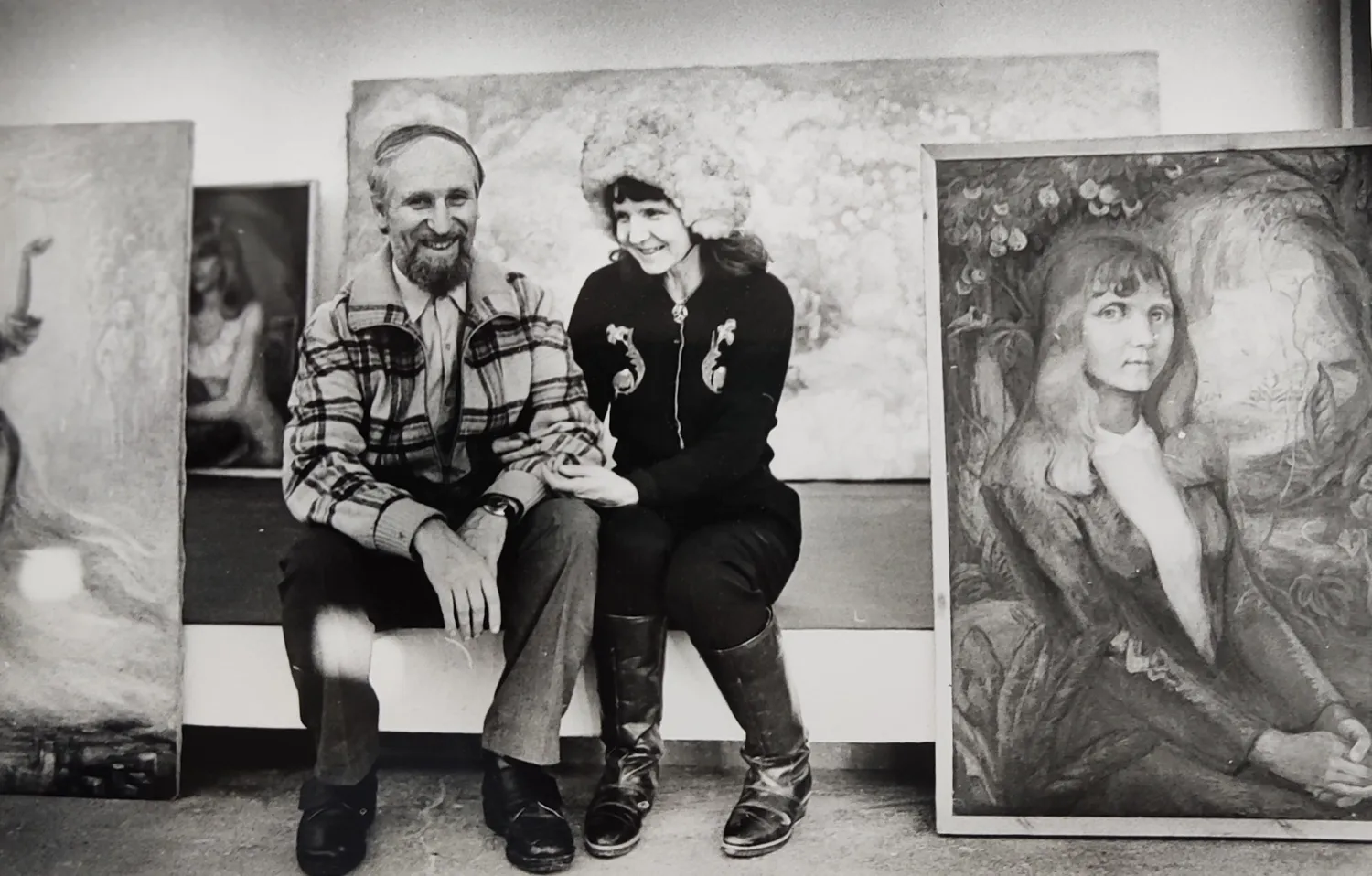
After university the artists were assigned to Kazakhstan under the state distribution system and lived in Kazakhstan and the Tien Shan mountains for about fifteen years — the principal school of plein-air work, observation and artistic unity.
Mountain landscape changes fast: sky, clouds, snow, rock, mist and air can change within a short time. A study takes an hour or two, or less, and in the mountains this time becomes especially tense — one must manage to preserve the state of nature before it vanishes.
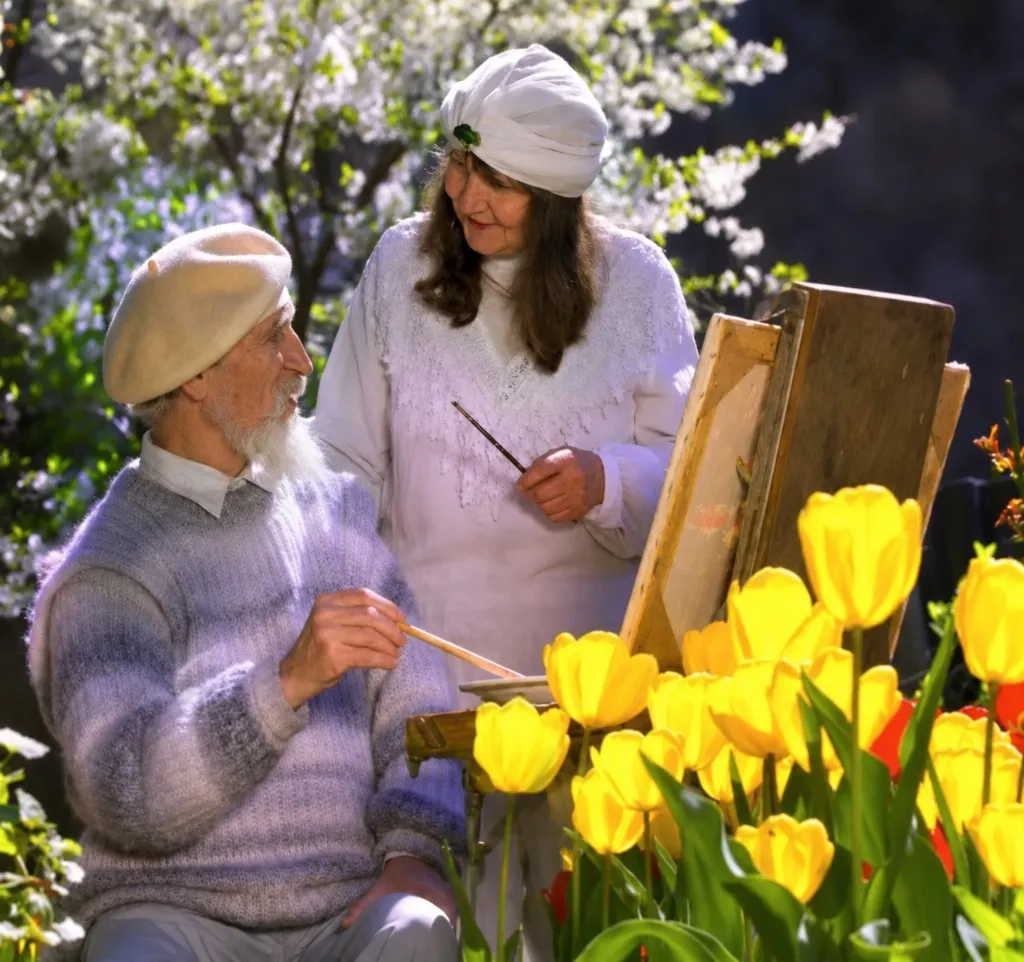
In time, "four hands" outgrew its practical task and became a symbol of a single studio. It is a sign that Grev Kafi's art is a dialogue, not the sum of two hands.
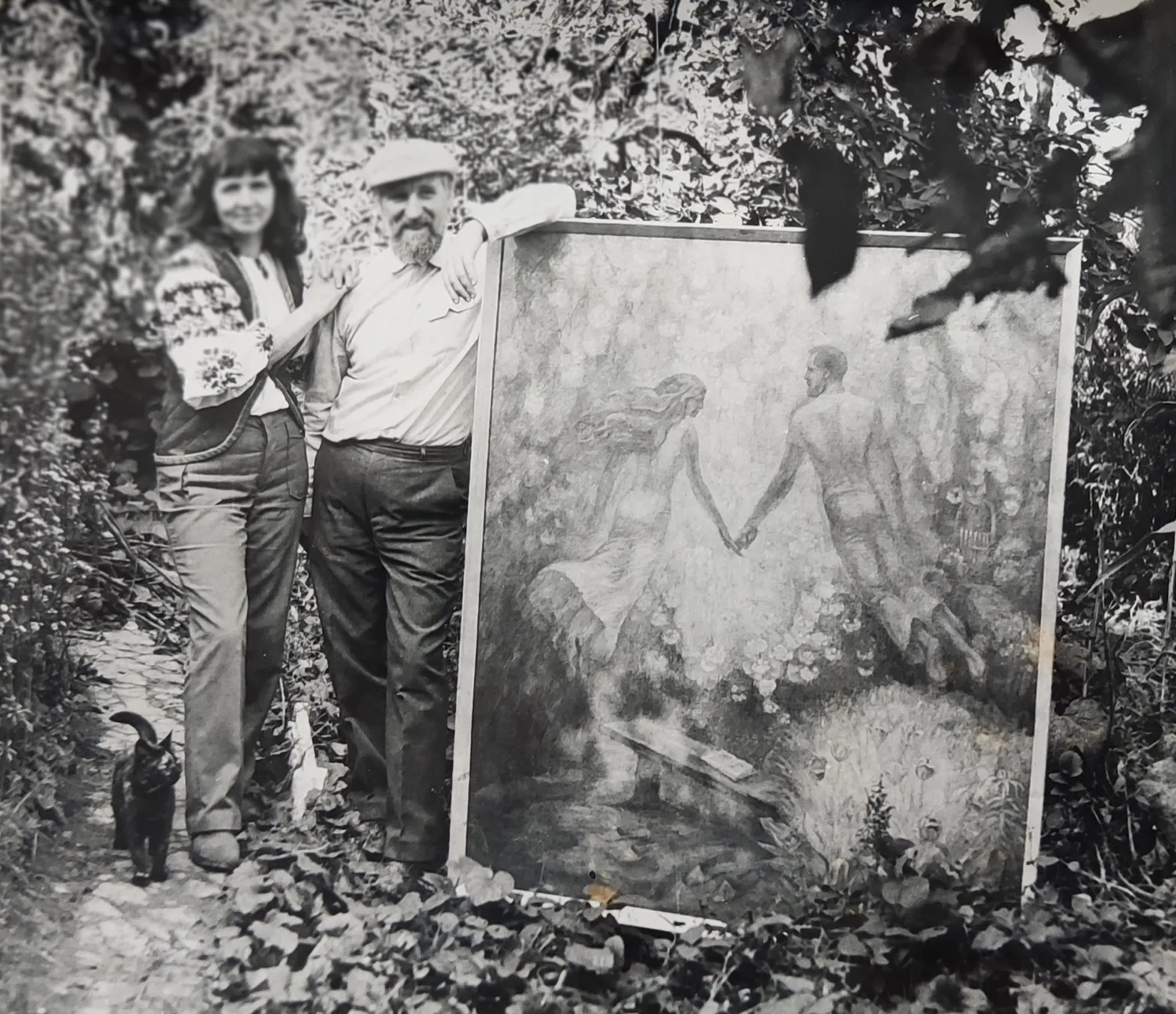
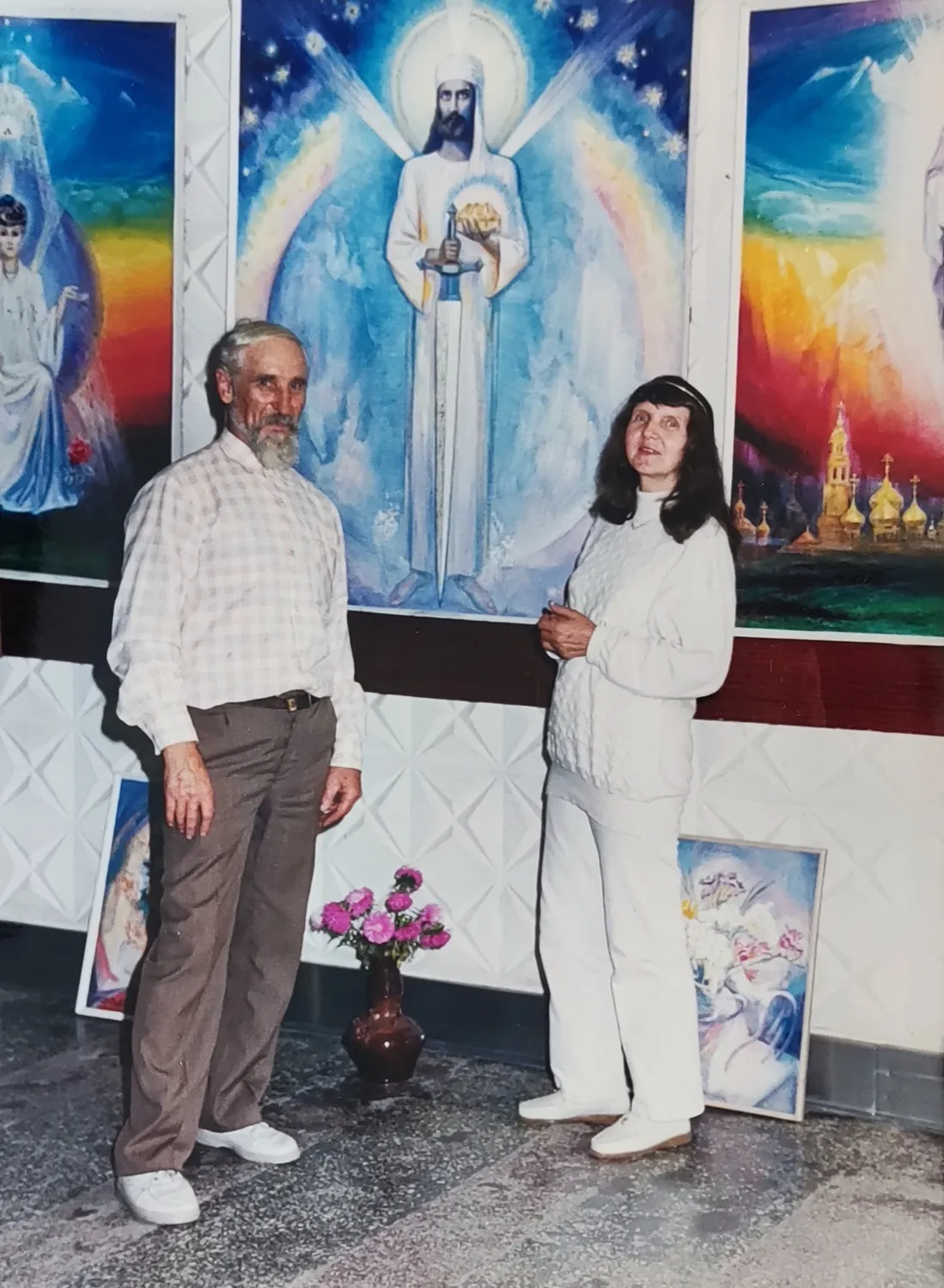
The same coordination later shaped the character of the large symbolic cycles too: they are conceived as a whole, where individual canvases sound within one shared structure.
The essence of the signature: Grev Kafi's "four hands" is not only a technical device but a symbol of a single studio and coordinated artistic thinking, in which painting becomes the result of shared, undivided labor.