Collection
Grev Kafi Collection
The Grev Kafi Museum collection brings together academic training, plein-air culture, symbolism, a philosophical reading of world traditions and the rare practice of joint painting - the four-hands technique.
Online publication of the collection is ongoing: new works, descriptions, translations and verified museum data will gradually appear on the site.
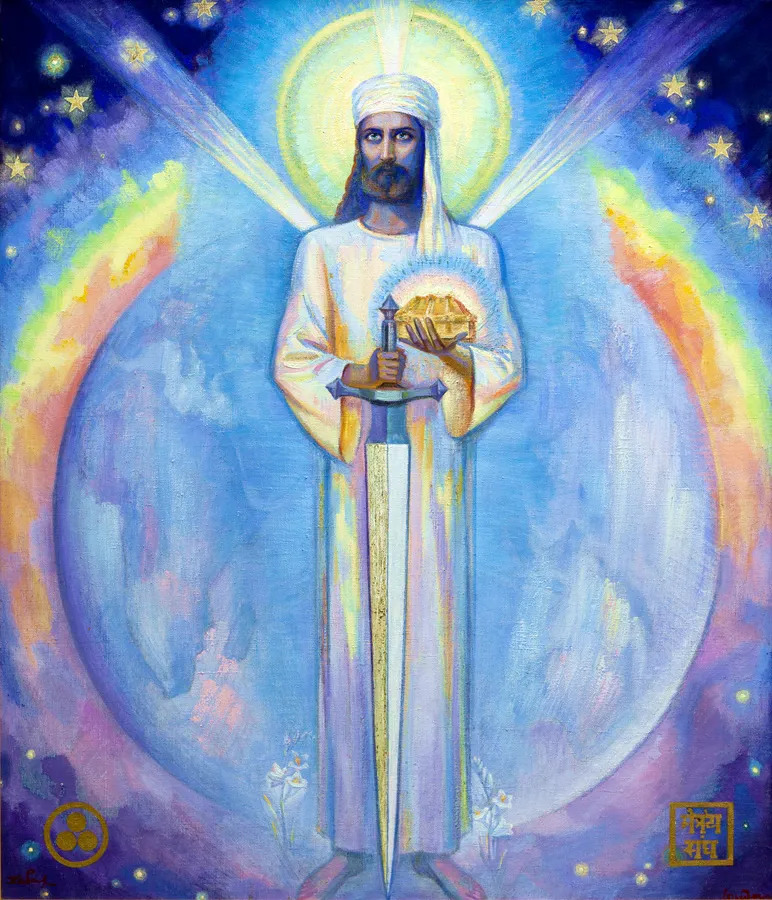
The collection as an artistic system
A collection that unfolds in layers
The Grev Kafi collection is important not only for the number of works, but also for its inner unity. It is not a random group of different pieces, but an artistic system where landscape, still life, portrait, architectural motif and complex symbolic composition exist side by side. For the visitor, the collection opens gradually: first through color, light and form, then through cultural memory, philosophical theme and the inner state of the human being.
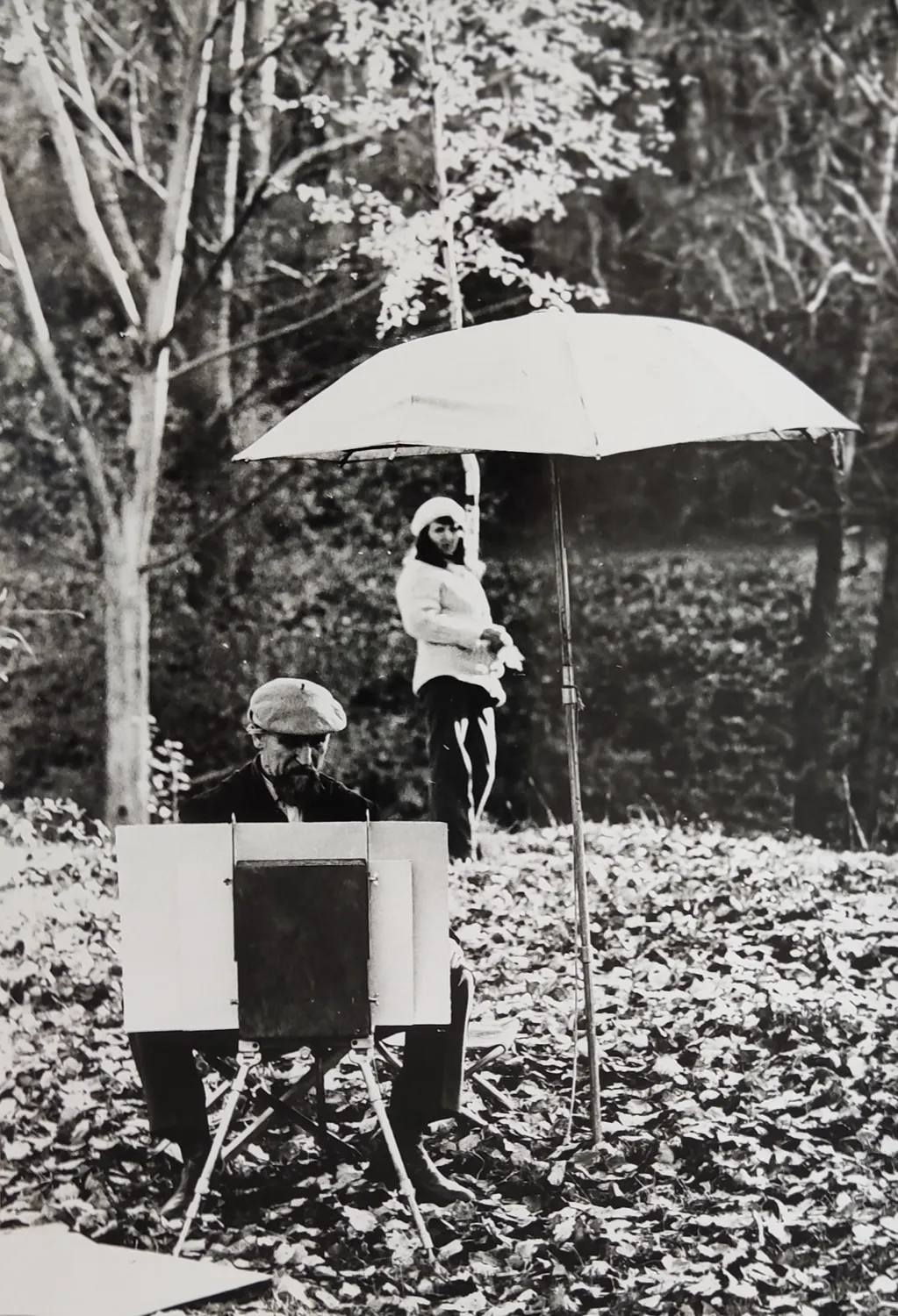
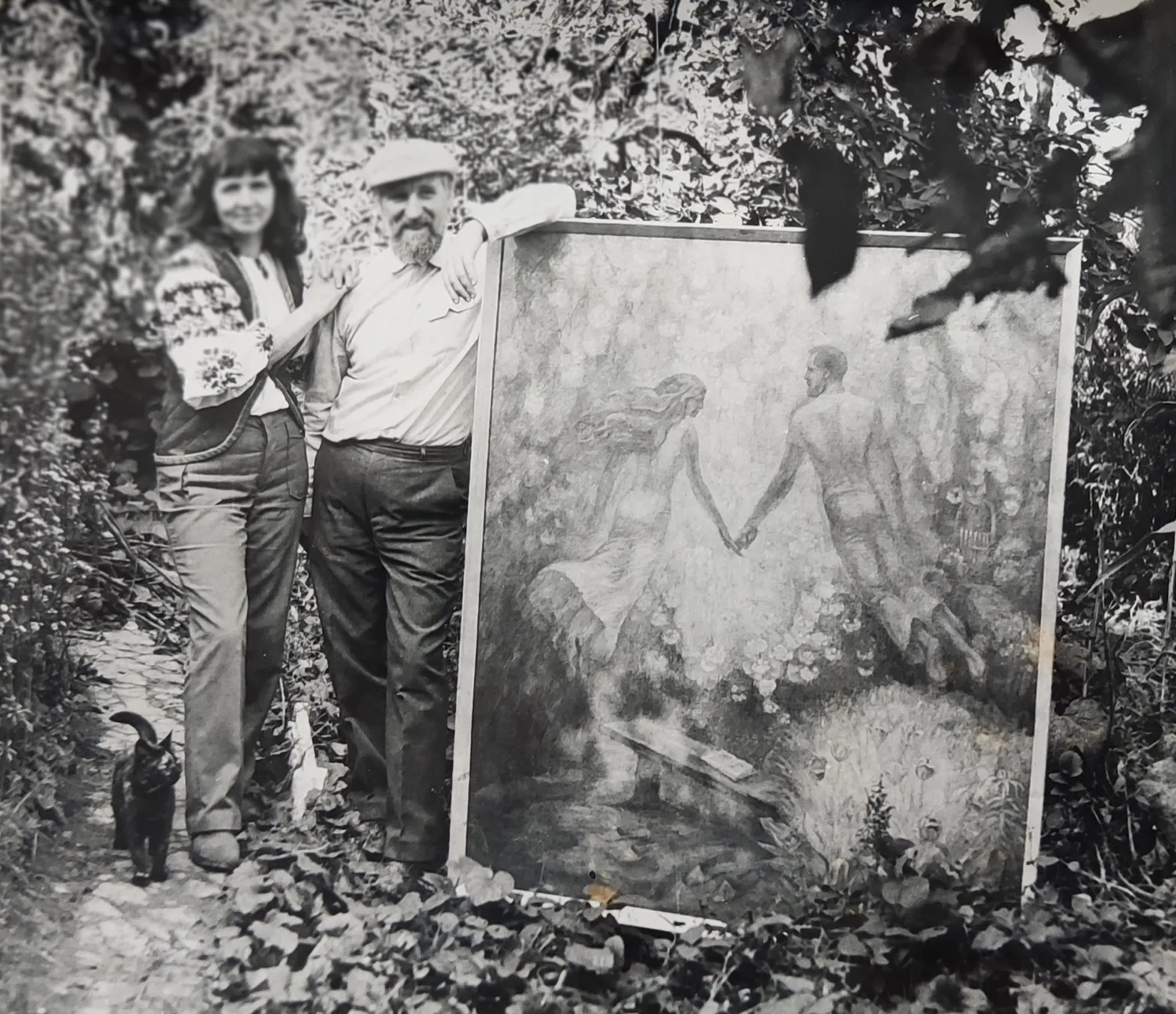
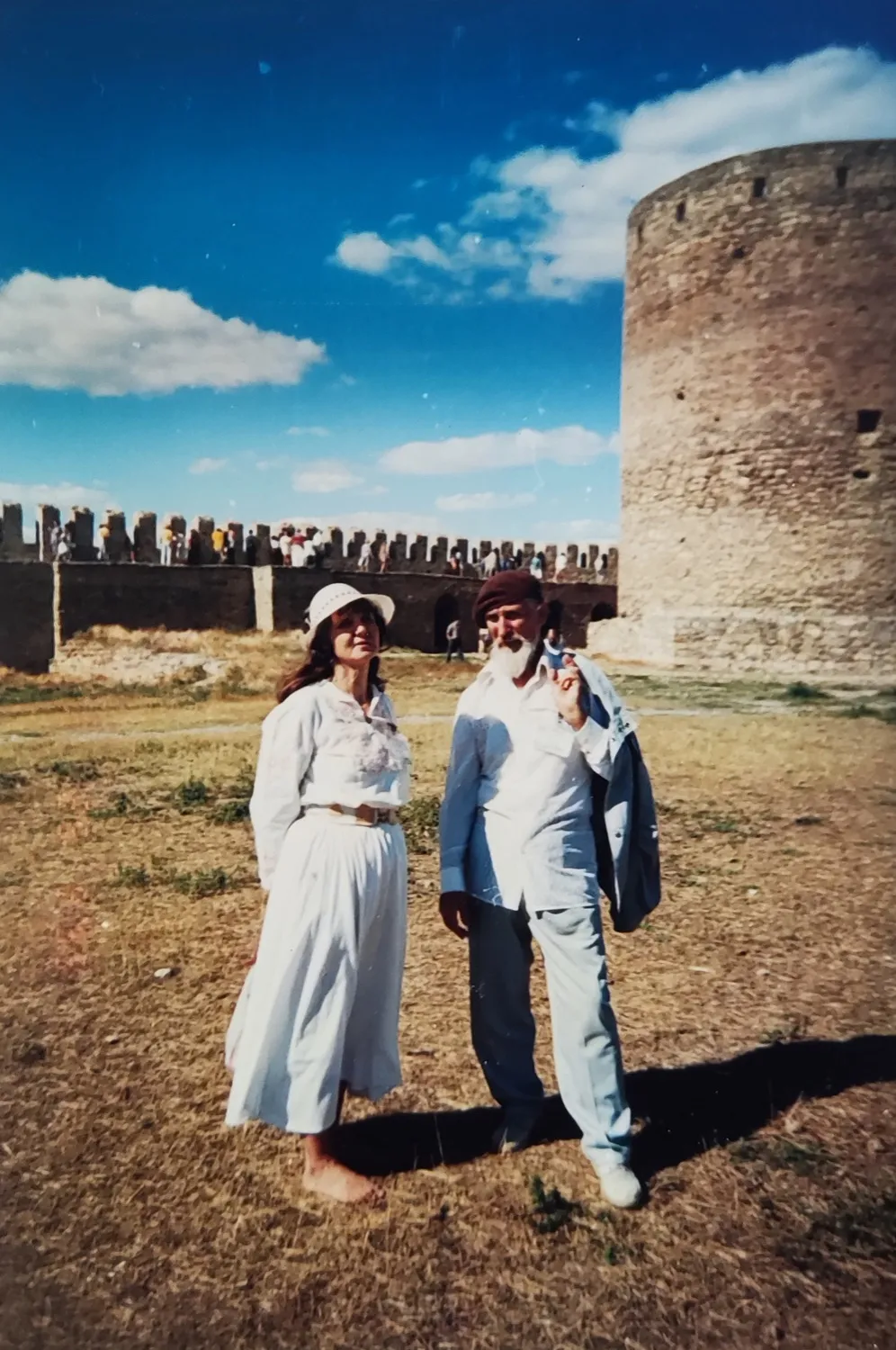
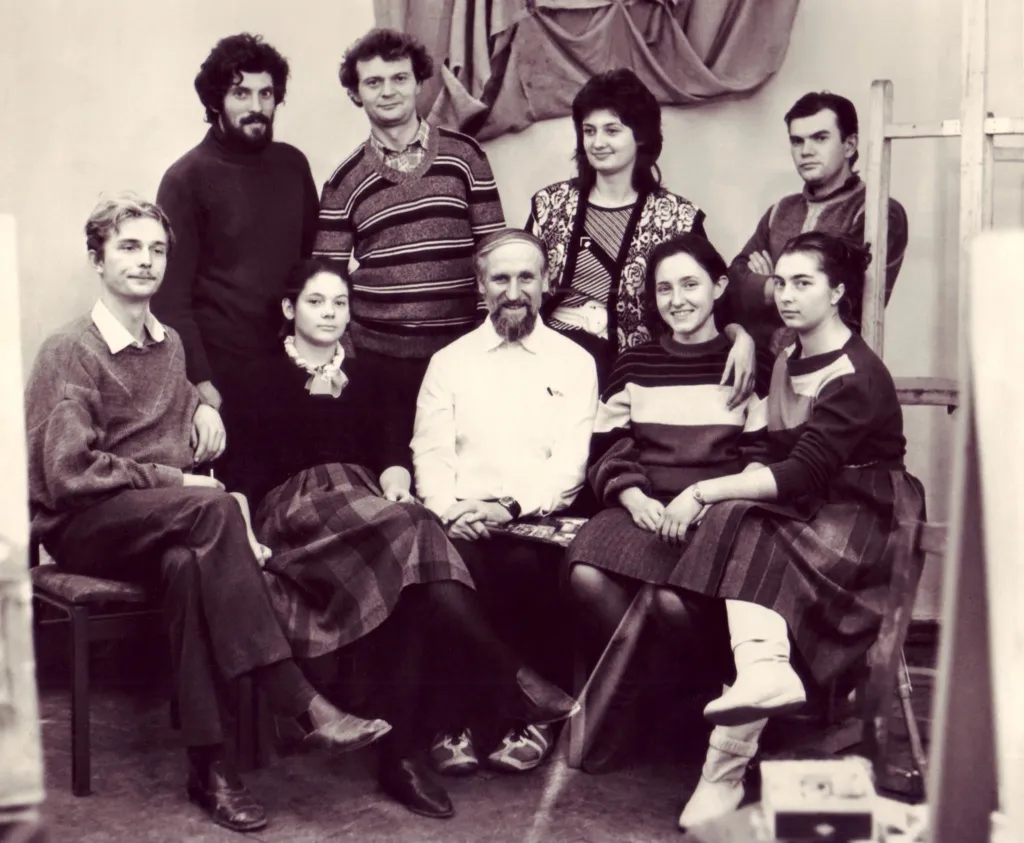
From the archive · the school of plein-air and painting together
Where to Start
The Duo's Signature
Before moving into the thematic sections, meet what unites the whole collection — the practice of painting together, born on mountain plein-airs.
Thematic Cycles
Seven Sections · a Sequential ReflectionFor Grev Kafi, a series is not a mechanical grouping of paintings by subject, but a way of sequential reflection. Each work keeps its independence, yet together they shape a wider picture of the world.
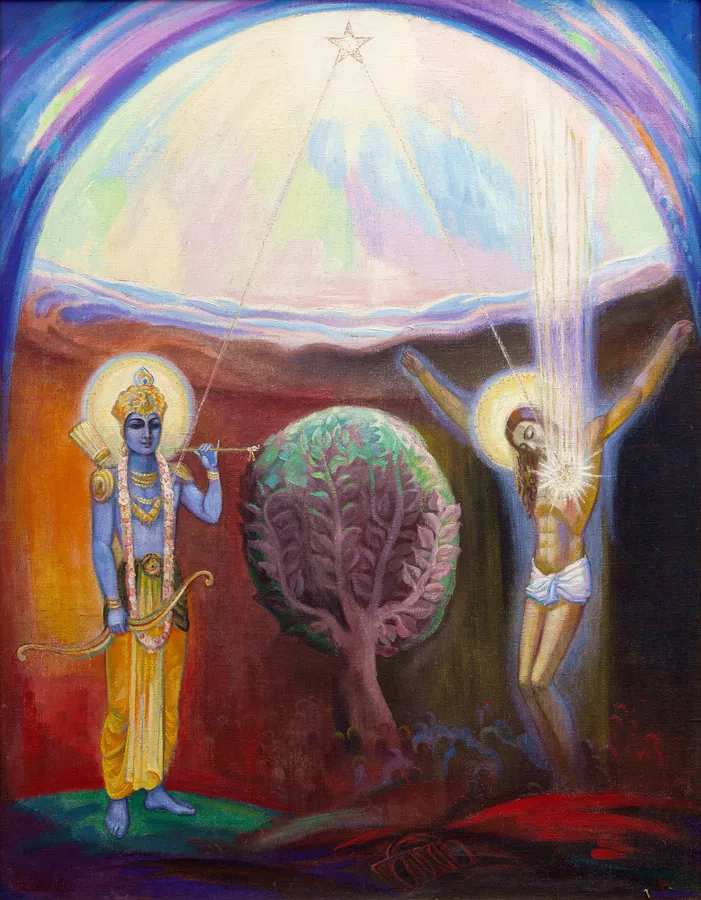
01 Thematic Cycle Agni Yoga A philosophical-ethical cycle about inner discipline, the quality of thought, responsibility and spiritual collectedness — where the symbol does not dictate an interpretation, but opens a space for inner dialogue. 5+ worksOpen Section 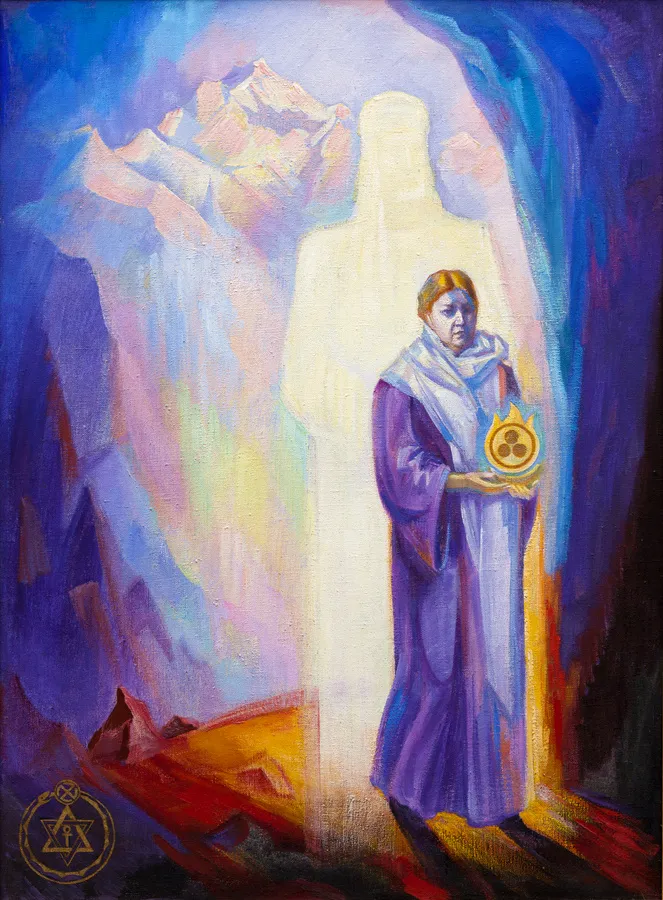 02 Thematic Cycle Great Teachers of Humanity Figures from world spiritual and cultural history — Buddha, Zoroaster, Moses, Solomon, Christ, Muhammad, Krishna, Sergius of Radonezh — as symbols of moral ideal and human dignity. 2+ worksOpen Section
 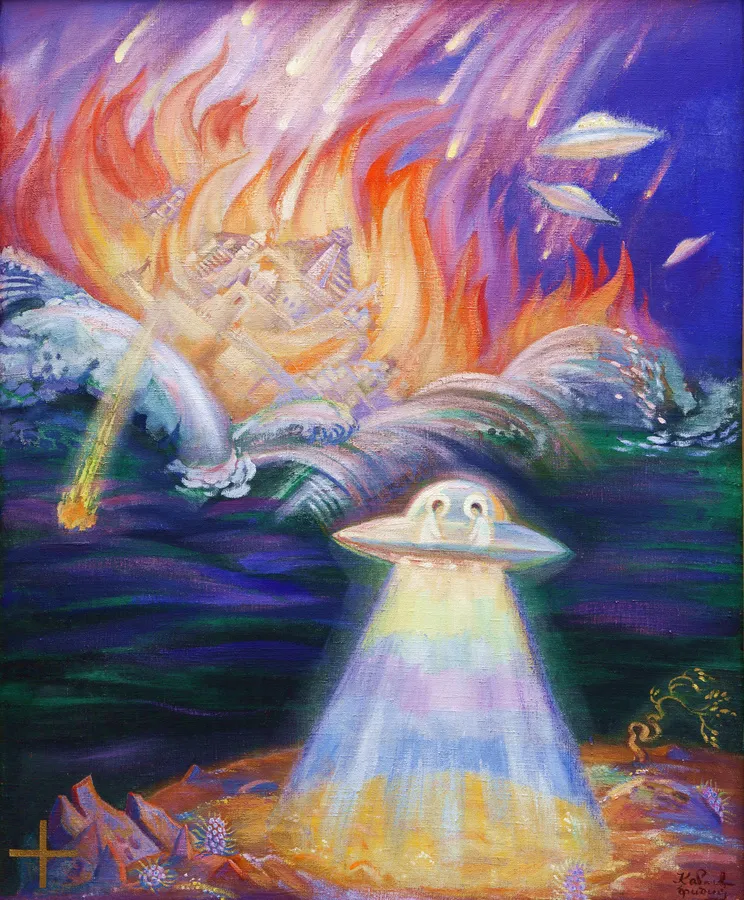 03 Thematic Cycle Secret Doctrine A cycle connected with H. P. Blavatsky's The Secret Doctrine: the memory of civilizations, symbolic history and a philosophical view of humanity's development. 1+ worksOpen Section 04 Thematic Cycle Tarot Arcana A series of 22 Major Arcana — a sequential artistic interpretation of a European allegorical system, where each image expresses a stage of the path, a trial, a choice, or an inner transformation. Being publishedOpen Section 05 Thematic Cycle Feminine Principle The feminine image as a symbol of life, protection, intuition, spiritual support and moral tenderness — one of the clearest entrances into Grev Kafi's symbolism. 1+ worksOpen Section
  06 Thematic Cycle Children The children's theme has a special resonance in the collection: the memory of childhood and a state of pure perception, where joy and mystery form a natural openness to the world. 1+ worksOpen Section
 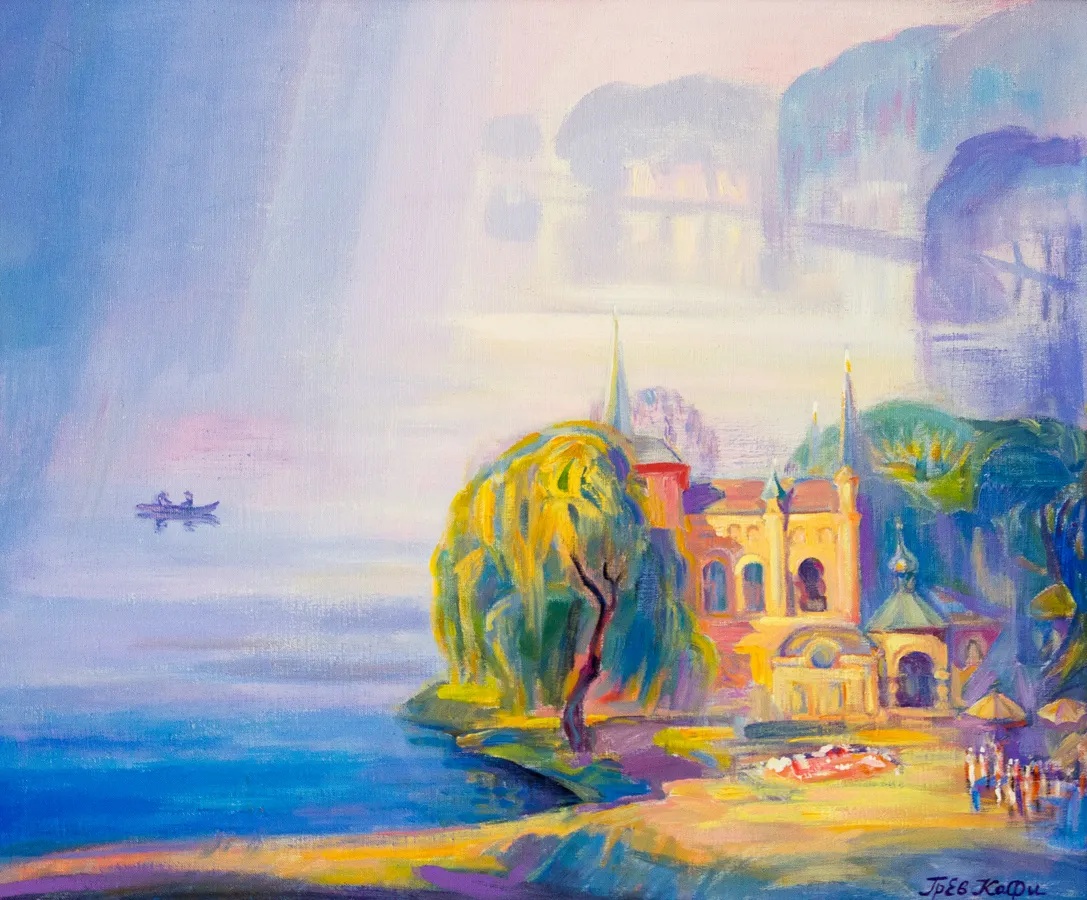 07 Thematic Cycle Watercolors An intimate, living and immediate cycle of watercolor sheets: a diary of light, air and the moment — from the Tien Shan and the Black Sea to Moldovan courtyards and gardens. Being publishedOpen Section
 Genre Sections
Five Sections · a Wide PaletteGrev Kafi's symbolism does not limit their art but expands it, letting them speak in one artistic language about nature, the human being, the city, history and ideas.
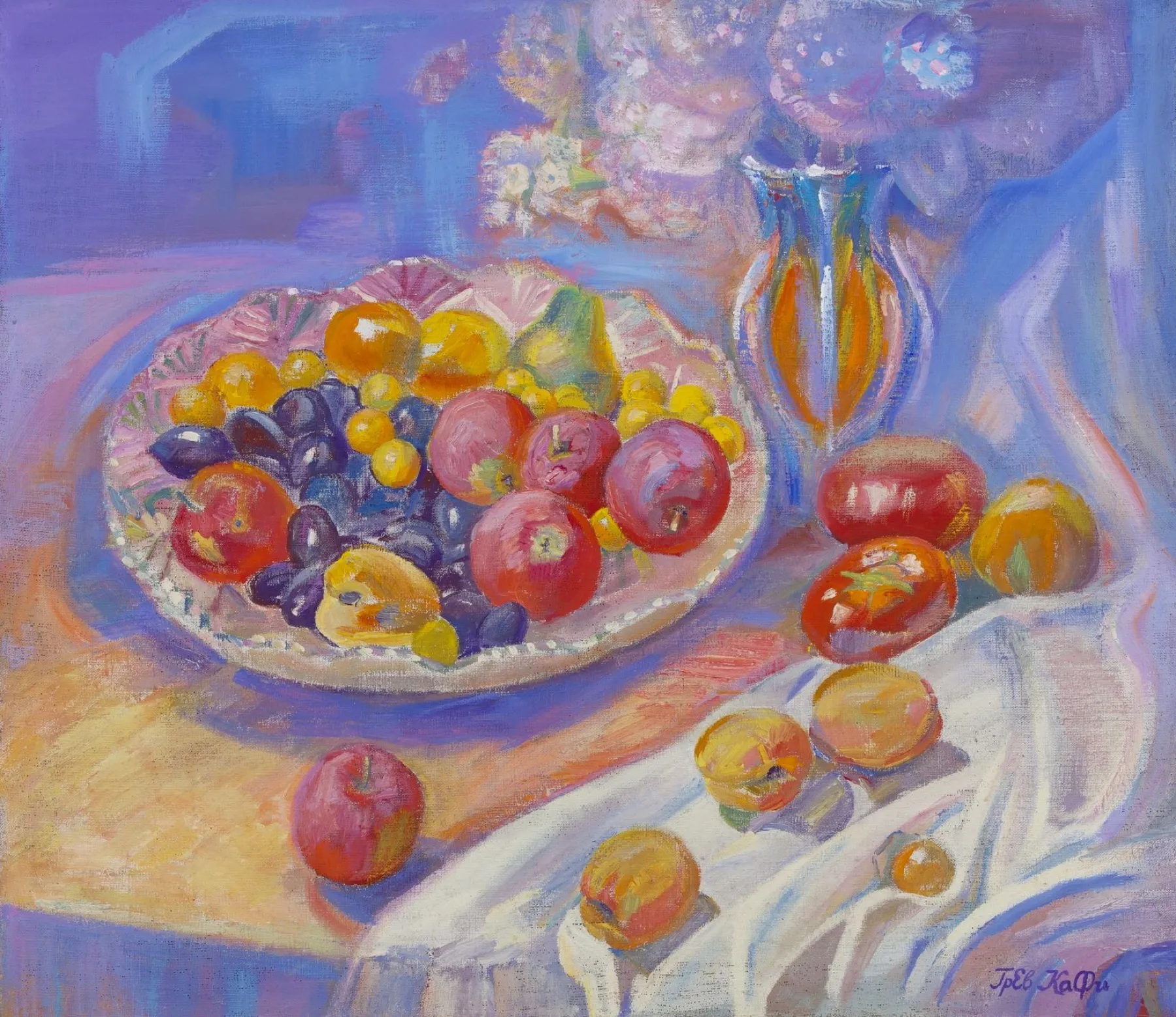
01 Genre Landscapes Landscape in Grev Kafi's work is a school of observation, where a sense of light, air, scale and rhythm takes shape. 6+ worksOpen Section 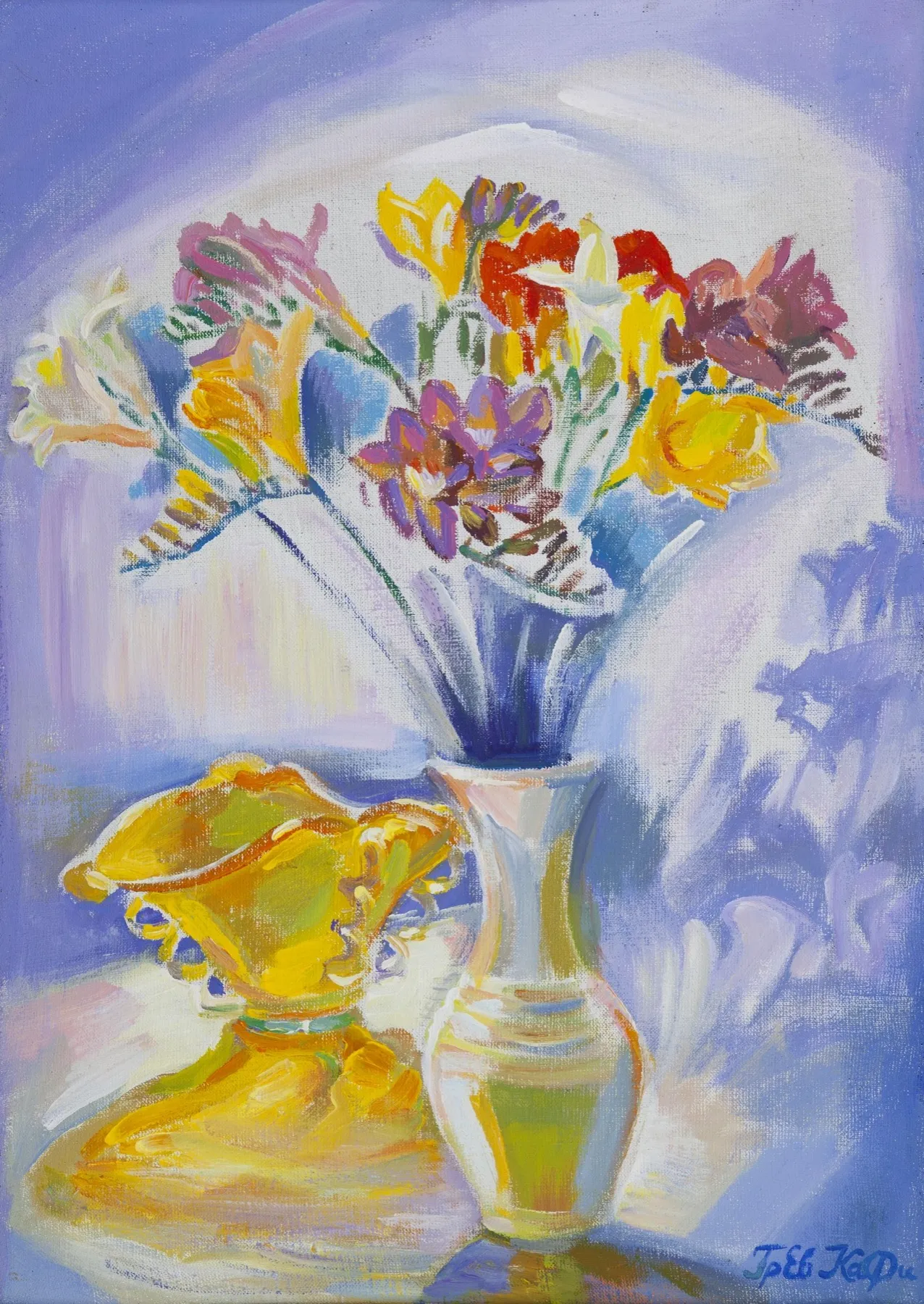 02 Genre Still Life Still life allows the eye and hand to be tested daily: how precisely the relationships between colors are built, how convincing the form is, how the surface "sounds." 2+ worksOpen Section
  03 Genre Portrait & Drawing The portrait line shows a shift toward a complex task — conveying not only likeness, but the depth of character, emotional state and human dignity. Being publishedOpen Section
 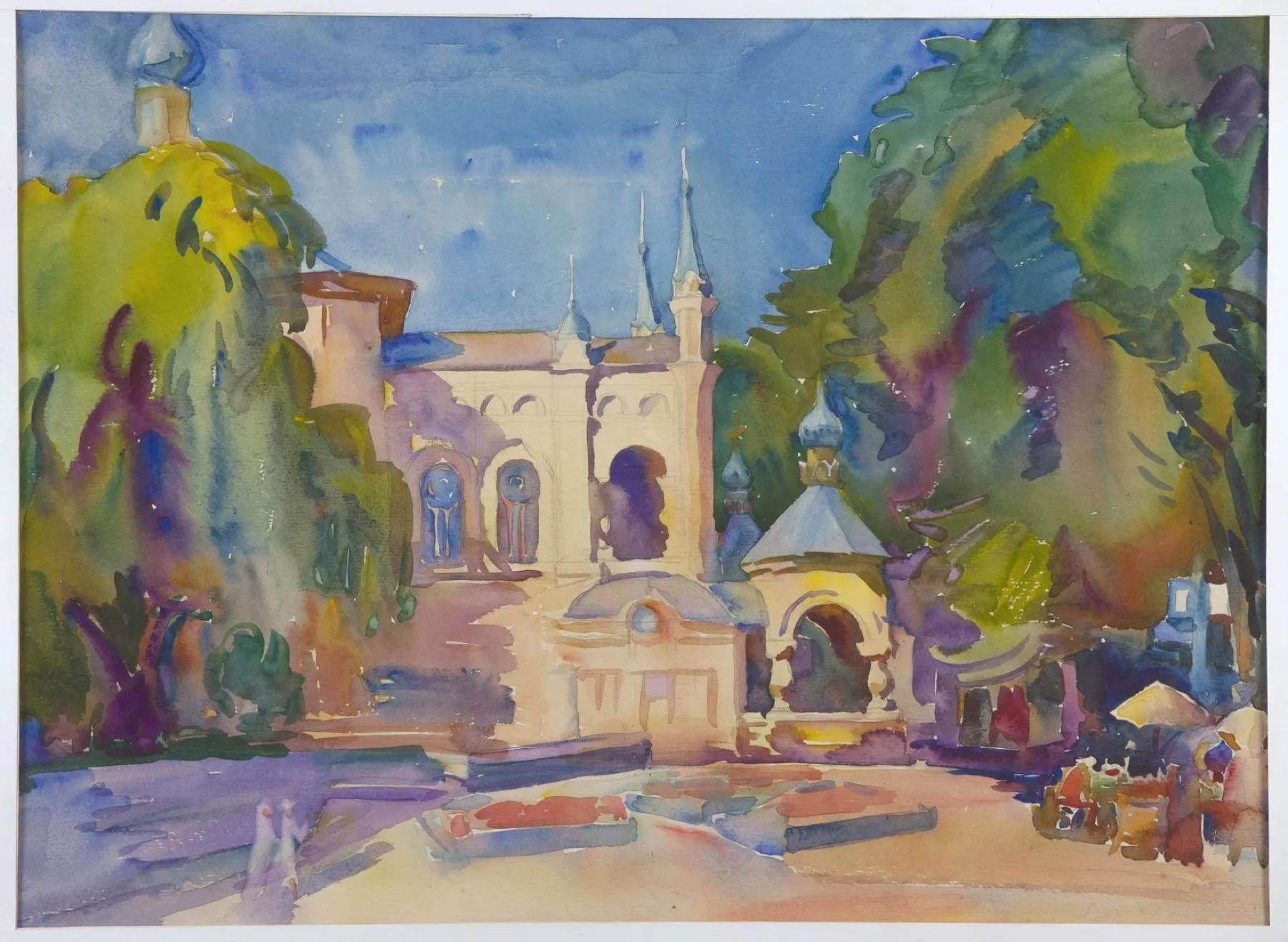 04 Genre Architecture & City The artists are interested not only in natural space but also in the space of culture — street, house, church, fortress, park, staircase, façade, urban perspective. 1+ worksOpen Section
 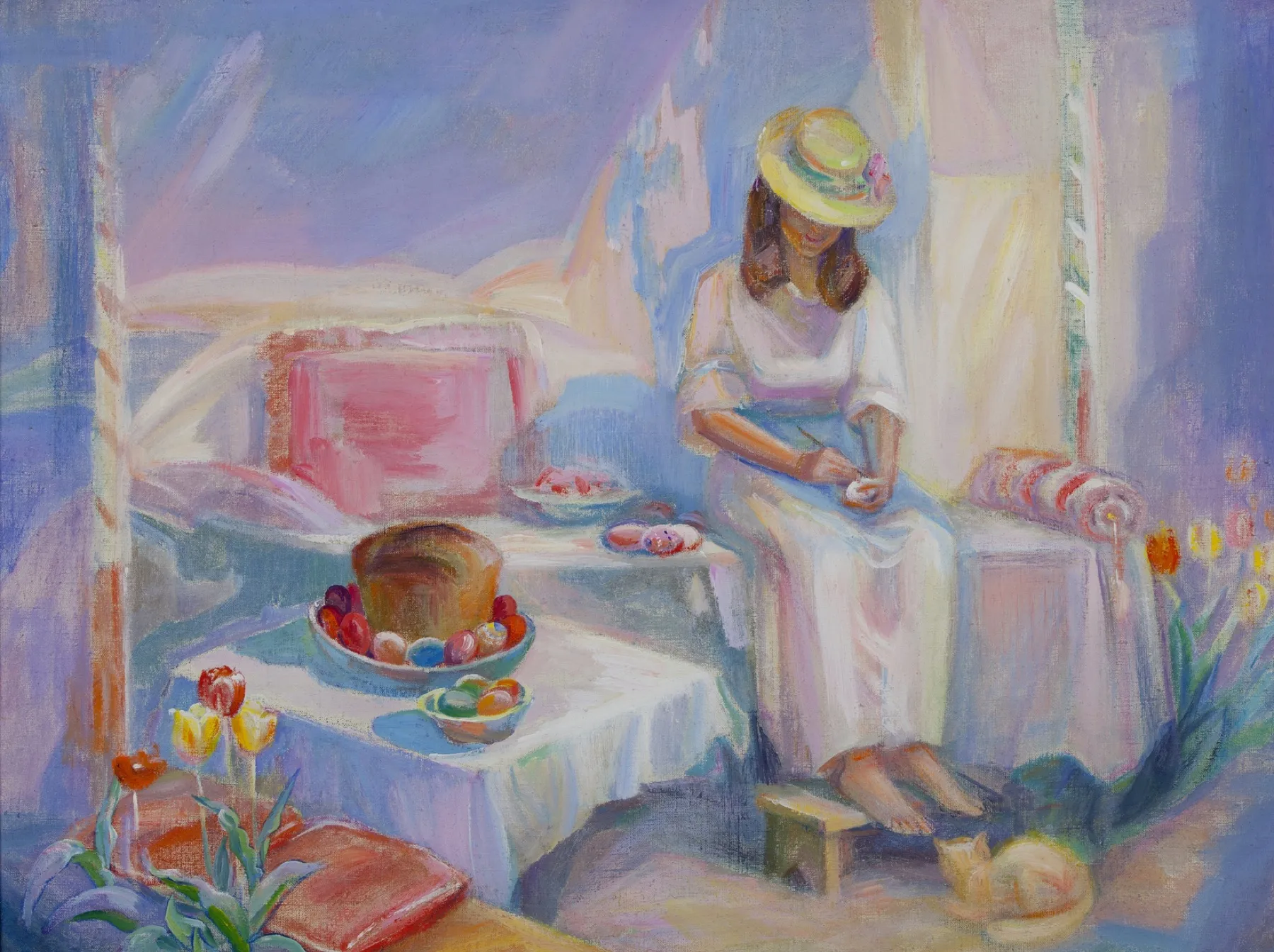 05 Genre Genre & Chamber Scenes These works show another side of Grev Kafi's artistic world — attention to the everyday as a space of culture. 1+ worksOpen Section
 Symbolism in the collection
Four Interwoven Directions
Grev Kafi's symbolism can be seen as several interconnected directions. They are not rigidly separated: mythological, religious, philosophical and spiritual motifs often overlap, forming a rich system of meaning that runs through every section of the collection.
Grev Kafi’s mythological symbolism is a dialogue with humanity’s cultural memory. In the ancient Egyptian layer, the ideas of wisdom, measure and inner order matter most, for instance in the image "Isis — Divine Wisdom." In the ancient Greek circle, Prometheus and Orpheus appear — images of freedom, creative gift and responsibility.
A separate thread is the theme of Atlantis. Through the Platonic story, the artists reflect on the fate of civilizations, the cost of historical mistakes, and the fragility of culture. For today’s viewer, this layer matters because it lets us see myth not as a "tale of the past" but as a philosophical language through which humanity has spoken about itself for centuries.
More in the sections: Secret Doctrine, Great Teachers of Humanity.
The religious thread is built as a cultural and artistic reading of the world’s traditions. The collection includes Judeo-Christian images — Christ, Moses, Solomon, the Trinity, Sergius of Radonezh; the Buddhist circle — the image of Buddha as a symbol of inner discipline, compassion and non-violence; the Hindu tradition — Krishna, Vaivasvata Manu, Kalki Avatar, Satya Yuga; Islamic cultural memory — the image of Muhammad; the Zoroastrian layer — Zoroaster.
These works should be read above all culturally and philosophically. Their meaning lies not in affirming a single religious system, but in the search for shared moral values that different traditions expressed through their own language of symbols.
More in the sections: Great Teachers of Humanity.
Grev Kafi’s philosophical symbolism is tied to timeless themes: time, choice, responsibility, inner freedom, balance, inspiration and self-overcoming. Especially telling in this circle are "The Music of the Spheres" (1991), "Thought" (1996), "Balance" (1998), "Narcissus" (1999), "On the Threshold of Eternity" (2001), "The Frozen Ocean" (2002), "The Artist" (2006), "Eternity" (2006), "Inspiration" (2013), "The One Who Conquered Himself" (2016).
Such works are experienced as an inner meditation on the human path. They do not tell a direct story but shape a state of reflection, in which colour, rhythm, composition and pause become the language of thought.
More in the sections: Tarot Arcana, Agni Yoga.
The spiritual symbolism in the collection is best understood in a neutral, philosophical-aesthetic sense — as a conversation about a person's inner life, their hope, moral ground, and yearning for light and meaning. What matters here is not dogma but universal themes: prayerful concentration, courage, responsibility, balance, overcoming and the path.
This circle includes "Abode of Light" (1993), "Show, Lord, Thy Hand" (1995), "Help Each Other Keep the Balance" (1998), "Mother of the World" (1998), "Prayer" (2001), "Messenger of Light" (2002), "I Am Thou, Thou Art I" (2018), "The Path Only Upward" (2020), "The Weeping Angel" (2020). These works do not call for a literal reading — they are open to cultural, philosophical and personal interpretation.
More in the sections: Agni Yoga, Feminine Principle.
Materials and Technique
From Oil to Tempera and Watercolour
The artistic school in which Grev Kafi trained was classical for the Soviet academic tradition: the foundation of study remained oil painting — working with form, tone, materiality and volume. This gave the duo a solid professional foundation, and oil works survive in the legacy, though relatively few.
Gradually, the artists turn ever more deliberately to tempera. Their pictorial language depends on transparency, lightness, a sense of air and clarity of light — and tempera lets them render exactly that state. It becomes the leading technique of the mature period, above all in the symbolic and philosophical compositions.
The collection also includes gouache and watercolour. These techniques widen the range of work — from a quick plein-air impression to a chamber composition and a carefully built programmatic canvas. The range of sizes, from a small study to a large painting, shows the professional link: the live, initial impulse is kept, then translated into a form built for lasting museum viewing.
The collection also holds pencil and charcoal drawings — the graphic foundation of the duo's pictorial language.
How to look at the collection
Three simple steps
See the work as a whole
The structure of light, the rhythm and the compositional centre — first the general impression, then the details.
Pick out the supporting image
Pay attention to the main image and the mood. The symbol works as an open metaphor, not a compulsory solution.
Move to the layers of meaning
Myth, philosophy, tradition, the history of an idea or the viewer's personal experience — naturally, without pressure.
Without pressure and without imposed interpretations.
Next
Want to see it in person?
Come to the museum or write to us with a question about the collection, a tour or a collaboration.