01
Buddha
Symbol of inner discipline and compassion
Image coming soon Collection Section
Figures from world spiritual and cultural history — Buddha, Zoroaster, Moses, Solomon, Christ, Muhammad, Krishna, Sergius of Radonezh — as symbols of moral ideal and human dignity.
Figures from world spiritual and cultural history — Buddha, Zoroaster, Moses, Solomon, Christ, Muhammad, Krishna, Sergius of Radonezh — as symbols of moral ideal and human dignity.
The meaning of the cycle is not comparison between religions and not preaching, but a search for common values that different cultures expressed in different languages.
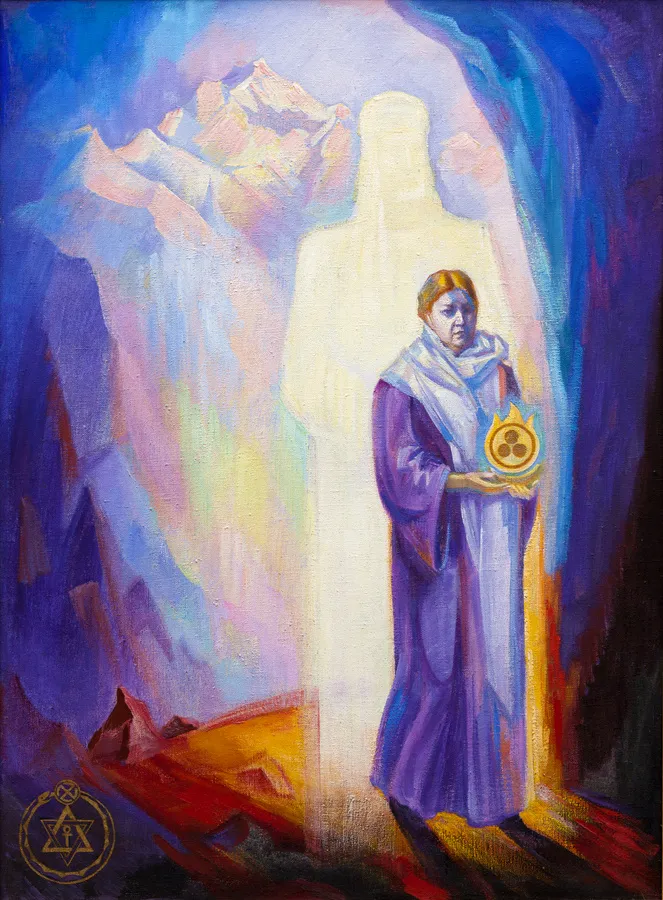
This cycle presents figures from world spiritual and cultural history: Buddha, Zoroaster, Moses, Solomon, Christ, Muhammad, Sergius of Radonezh, Krishna and Christ, Vaivasvata Manu, Mahatma Morya and others.
This part of the collection is especially important from the standpoint of cultural diversity: the world's traditions are perceived as the shared heritage of humanity.
Different traditions are not set against each other here, but reveal shared values.
Context
Grev Kafi show that the world's traditions can be perceived as humanity's shared heritage. Through different images, ideas of compassion, wisdom, responsibility, service, inner discipline and respect for the human being are revealed.
These works should be understood primarily in cultural and philosophical terms: their meaning lies not in affirming a single religious system, but in the search for shared moral foundations.
Creation Story
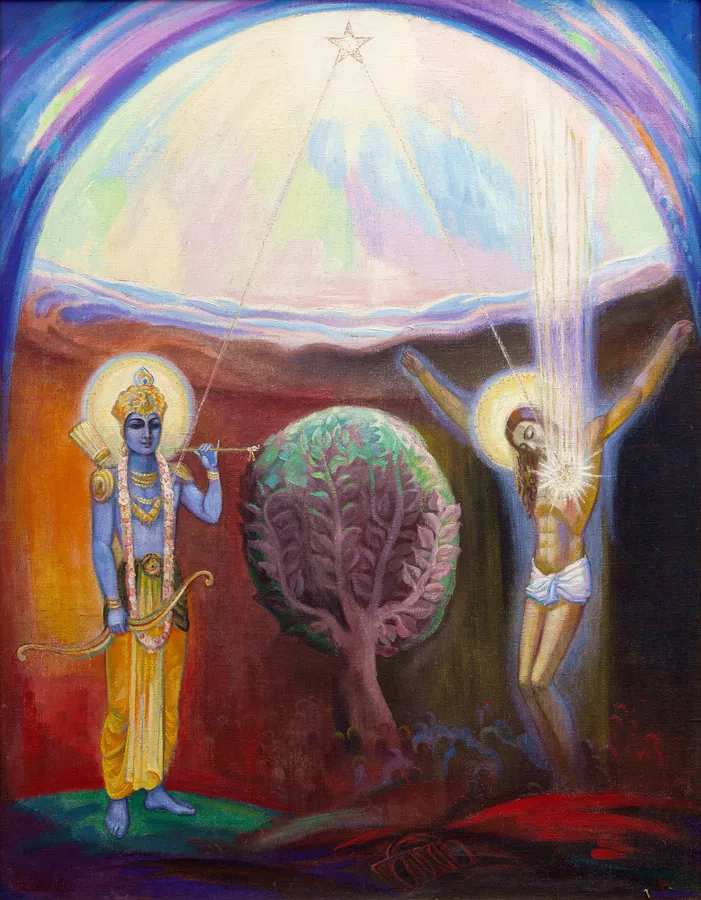
Among the works of the cycle are large programmatic canvases: "Krishna and Christ" (138 × 108, 1997), "Kalki Avatar" (136 × 114, 1997). The scale of the format is calibrated for museum viewing and prolonged reading.
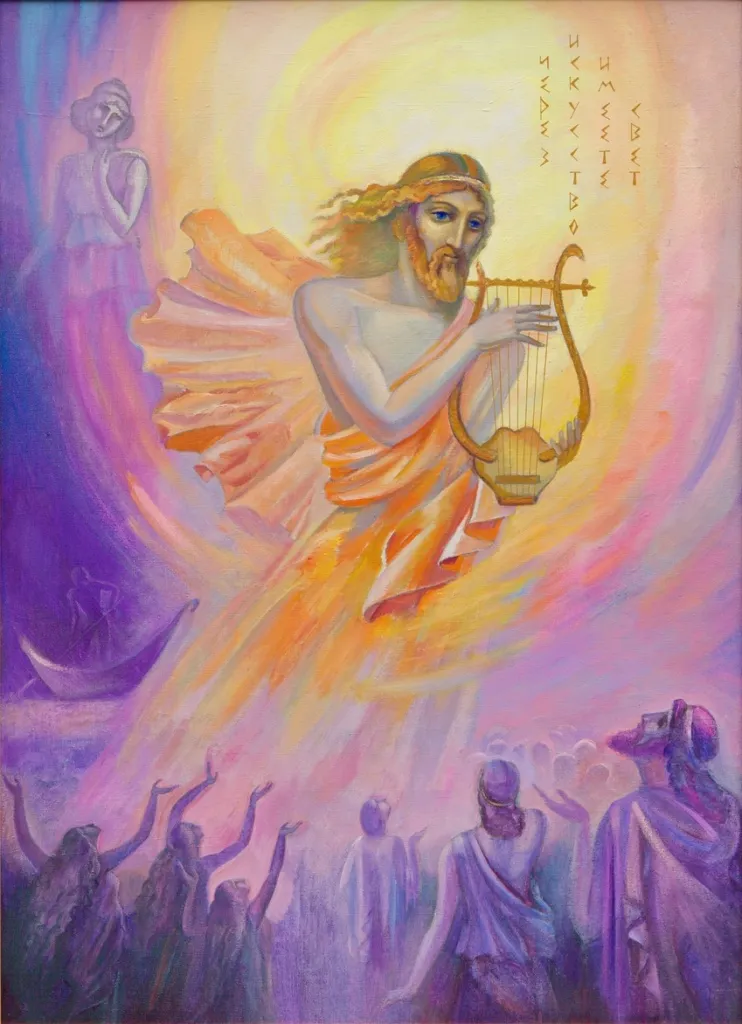
Alongside the world's teachers, this circle also includes cultural heroes of antiquity — Orpheus and Prometheus: images of creative gift, freedom and responsibility.
Also in the cycle
Judeo-Christian images, the Buddhist and Hindu circle, Islamic and Zoroastrian memory sit side by side as languages of one human culture. The meaning lies not in affirming one system but in shared moral values.
Christ, Buddha, Krishna, Moses, Zoroaster, Muhammad
Orpheus and Prometheus introduce the ancient layer: freedom, creative gift, the dignity of spirit. Myth here is a philosophical form of thought, not an "ancient tale."
Orpheus, Prometheus, Hermes Trismegistus
Curator's Note
Do not read this wall as a pantheon proving something. It is a gallery of agreement: different eras and cultures looking in the same direction — toward dignity, measure and compassion.
Pause at "Krishna and Christ." The cycle asks not that you choose between traditions, but that you hear what they say in unison.
"Krishna and Christ" (138 × 108) and "Kalki Avatar" (136 × 114) — the cycle's programmatic canvases.
Buddha, Moses, Solomon, Sergius of Radonezh, Muhammad, Zoroaster.
Orpheus and Prometheus — cultural heroes of freedom and creative gift.